



Skin Flap Surgery
At Shellharbour Skin, a consultation with Dr Barnaby Gordon-Hall provides an opportunity to discuss appropriate options for managing skin defects, particularly those that may not be suitable for simple closure. One technique that may be considered is skin flap surgery — a reconstructive approach sometimes used to cover wounds following the removal of a skin lesion..
What is Skin Flap Surgery?
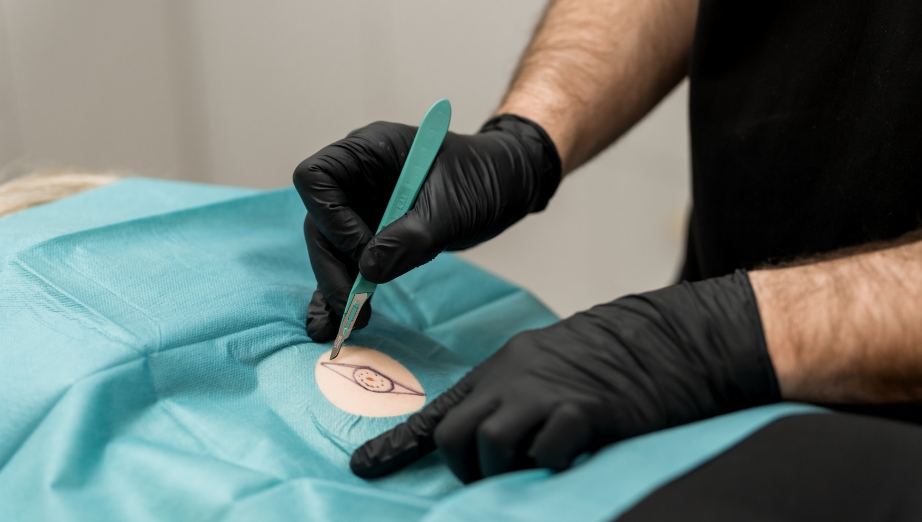
Skin flap surgery involves moving a section of tissue from one part of the body to another while maintaining its original blood supply. Unlike a skin graft, which is separated from its original vessels, a flap remains attached through connected arteries and veins.This approach may be discussed for wounds where the underlying area has limited circulation or where a direct closure could affect skin tension or mobility.
Indications for Skin Flap Surgery
During your consultation, Dr Gordon may discuss this technique for circumstances such as:
- Covering skin defects following the removal of large or deep skin lesions.
- Managing wounds where a simple closure may cause significant tension on the surrounding tissue..
- Addressing areas of functional or cosmetic significance, such as the face, neck, or hands.
The decision to proceed will depend on the individual characteristics of your wound, your health, and clinical suitability.
Procedure Overview
Before any procedure, Dr Gordon will explain the steps involved and outline the potential risks, benefits, and expected recovery process.
A skin flap is carefully planned, with attention to the size, shape, and natural skin contours of the surrounding area.
The procedure is generally performed under local anaesthesia at our Shellharbour Skin clinic.
The duration and complexity vary depending on the site and the type of flap used.
Your clinician will ensure you understand the process and have an opportunity to ask questions before giving consent.
What to Expect After the Procedure
After the procedure, your clinician will provide detailed instructions for caring for the area and monitoring for signs of infection or other concerns.
Sutures are generally removed within one to two weeks, although this may vary based on the surgical site and healing progress.
You may experience some swelling, bruising, or tightness around the area, which usually settles as healing progresses.
Follow-up appointments will be arranged to monitor your recovery and to ensure that the flap remains healthy and well-perfused.
Follow-Up and Support
The Shellharbour Skin team provides ongoing review and guidance throughout your recovery.
At follow-up visits, Dr Gordon will assess how the flap is healing and discuss whether any additional management may be needed.
All care is provided in accordance with professional medical standards and within an environment that prioritises safety, clear communication, and informed decision-making.
If you have a question, get in touch and one of our staff will be in touch shortly.


 Follow us in Instagram