




Elliptical Excision
At Shellharbour Skin, a consultation with Dr Barnaby Gordon-Hall is the first step in discussing your skin concerns. During this consultation, he may discuss various management options, including an elliptical excision. This is a precise minor surgical technique that may be considered for the removal of certain skin lesions along with a small margin of surrounding tissue. Our focus is on providing thorough assessments and evidence-informed care for individuals seeking to manage a range of dermatological concerns.
What is an Elliptical Excision?
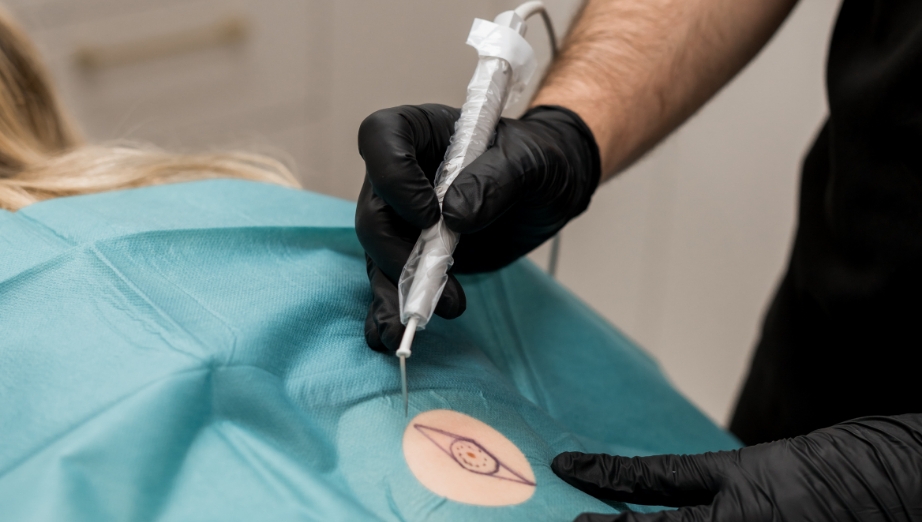
An elliptical excision is a surgical method in which a doctor makes an ellipse or football oval-shaped incision to remove a skin lesion..The incision is typically designed to include a margin of healthy tissue around the lesion to assist with complete removal and allow for proper wound closure.
This procedure may be discussed for skin lesions such as moles, cysts, or other growths that require removal and histological examination.
Indications for Elliptical Excision
This technique may be discussed during a consultation for individuals with lesions requiring further evaluation, including:
- Skin cancers, such as basal cell carcinoma, squamous cell carcinoma, or melanoma.
- Atypical moles (dysplastic nevi) that require additional assessment.
- Benign lesions causing discomfort, irritation, or other symptoms.
The decision to proceed is based on your clinical assessment and medical history, which will be discussed in detail during your consultation.
Procedure Details
During your consultation, Dr Barnaby Gordon-Hall will explain the details of the elliptical excision technique, including the purpose, steps involved, and associated risks.
The procedure involves:
- Cleansing the area and administering a local anaesthetic to numb the site.
- Creating an elliptical incision around the lesion, which allows for ease of closure.
- Removing the lesion and an appropriate tissue margin for pathology testing.
Closing the wound with sutures, which are typically removed within one to two weeks.
The excised tissue is always sent to a specialist pathology laboratory for histological assessment.
This ensures a detailed microscopic analysis of the specimen, including confirmation of whether the lesion has been fully removed.
What to Expect After the Procedure?
Understanding the post-procedure experience is a key part of your consultation. After an elliptical excision, sutures (stitches) are often used to close the incision and are typically removed within one to two weeks, depending on the area. Dr Gordon will provide you with detailed aftercare instructions to support your skin’s natural healing process. He will also provide guidance on how to care for the area. Any potential discomfort can typically be managed with simple pain relief, and this will be discussed with you.
Follow-Up and Support
Once pathology results are available, Dr Gordon will review them with you and discuss any recommended next steps.
This may include confirming that the lesion has been completely removed or planning additional management if required.
You will have the opportunity to ask questions and ensure that you fully understand your results and follow-up plan.
If you have a question, get in touch and one of our staff will be in touch shortly.


 Follow us in Instagram